Thais Glenn Coaching
Blog & Podcast
Pages of journals are hard to look back on. One page a month is not. Here are the five questions I use, and why the goal is never the point.
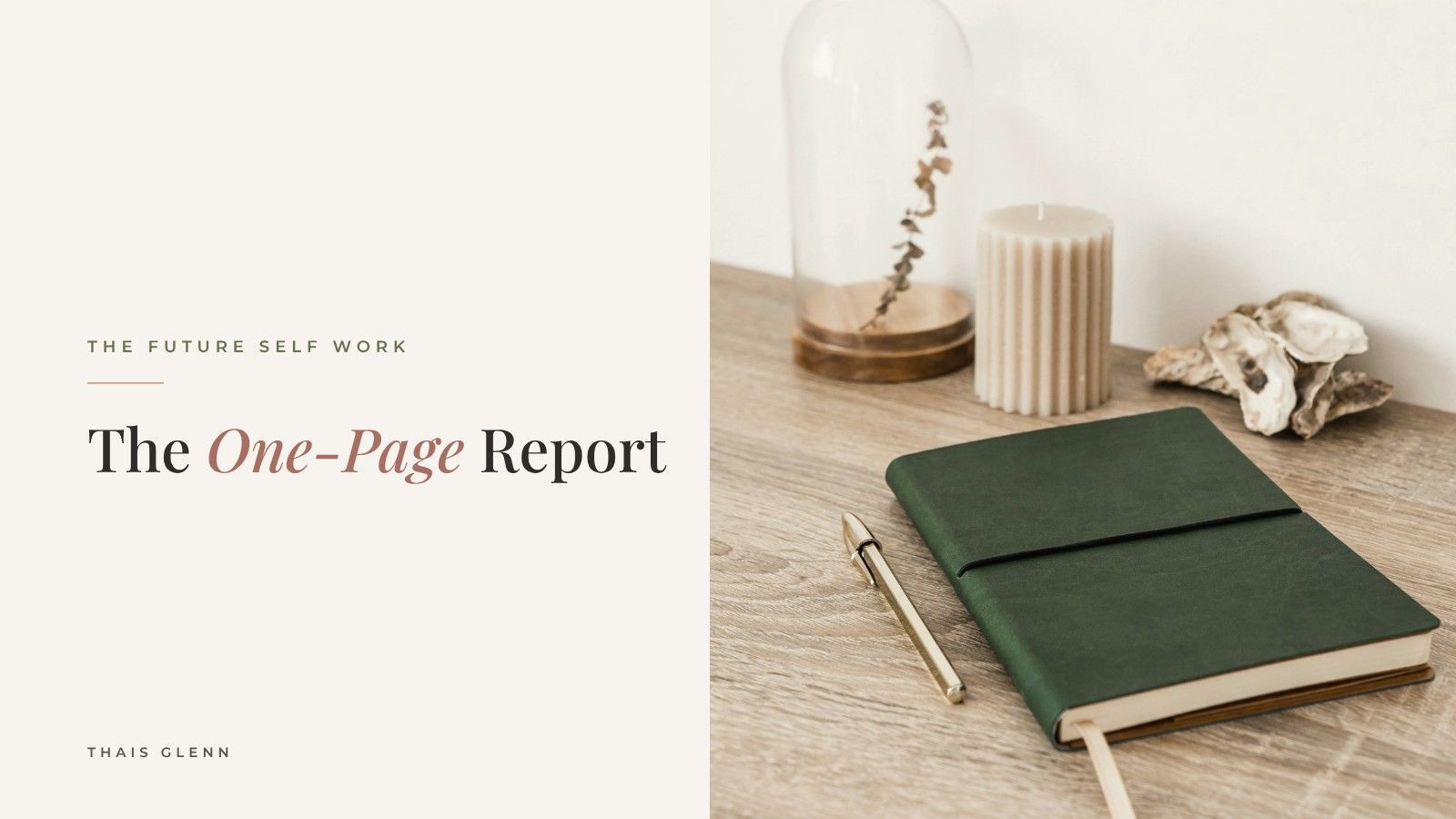
At the beginning of something new, everything feels possible. We are so motivated to do all of the things. Then, two or three months later, we start to give up a little.
I see it with my clients, and I have lived it myself. What helped me stop that cycle was not more motivation. It was a simple habit: writing a one-page report.
The idea came from Dr. Benjamin Hardy, and over the years I adapted it to the way I work with the future self. The rule is in the name. It fits on one page. (Mine is usually a page and a half, and that is okay.)
Why one page works
Pages and pages of journals are wonderful, but almost nobody goes back to read them. One page is something you can read in two minutes.
Ben Hardy suggests writing one every month. By the end of the year you have about twelve pages that show what you thought your focus was, month after month.
Right before I recorded this week's lesson, I opened one of my reports from 2023. I smiled. A lot of what I wrote back then was not what I actually ended up working on. I thought it was my priority. Looking back, it was very different. That alone is worth the practice.
The five questions
Use bullet points. Keep each answer short. This is a snapshot, not a thesis.
- Your past. What are three to five things from your past that still influence you? What did each one teach you?
- Where you are right now. A quick, non-judgmental pulse check across your mental, emotional, spiritual, physical and financial life. What is going well? What is frustrating you?
- Your recent wins. What have you created lately? Include the small ones, the ones no one else would notice. You notice, and that matters.
- Your future self, a year from now. From where you are sitting today, what do you see? Don't spend long on it. Just take a guess.
- Measurable goals. A few specific goals that give your year a direction.
The goal is not the point
Here is the part most people miss. The point of having a goal is not to achieve it. It's to see who you are becoming in the process of achieving it.
A goal is a point of reference. It's a way to measure. And it can change at any minute.
When I did this exercise again recently, my answer for "a year from now" was different from what I had written in my identity map just a few weeks before. Something had changed. I would never have noticed it if I hadn't written both down and compared them. Because I noticed, I could ask why, and I could be intentional about it. The new direction is a lot more aligned with the values I'm working on.
That is what this page gives you. Not a checklist to tick off, but information. Direction. A clear look at what your mind, as of today, is allowing you to create tomorrow.
Your turn
Pick a quiet moment this week. Light a candle if you like. Answer the five questions on one page, and save it somewhere you will find it again next month.
And if you'd like to do it with me, come to Thursday's free live class.
Every Thursday I teach a free live class. Save your spot for this week's class.